Understanding Encephalopathy After an Auto Collision
By: James D . Spiros | Last Reviewed & Updated: May 14, 2026
Learning you have encephalopathy after a car accident can feel overwhelming. A crash puts sudden and intense force on your head and neck. This force can cause the brain to bounce against the skull, leading to bruising, bleeding, or swelling.
In many cases, the physical impact of the accident triggers the condition. Doctors often find signs of brain dysfunction while they treat you for other crash related injuries.
This section explains how encephalopathy affects your health and helps you understand the legal options available to you.
What Is Encephalopathy?
Encephalopathy is a general term for any disease or injury that changes the way your brain works. It is not a single disease but a condition where the brain does not function properly. When this happens, you may feel confused, have trouble thinking clearly, or experience personality changes.
The brain needs a steady environment to work well. When a trauma or illness disrupts this environment, the brain can swell or suffer damage. While some forms of this condition are temporary, others can cause long term challenges that affect your daily life.
Disclaimer: This content is for informational purposes only and is not medical or legal advice. Always seek prompt medical care for suspected injuries.
Why Medical Bills Are So High
Treating a brain injury is very expensive. You likely see many specialists and face high costs for items such as:
Emergency Room Visits: Doctors use tests like CT scans and MRIs to look for brain swelling or bleeding.
Specialized Care: You may need to see a neurologist, which is a doctor who focuses on the brain and nervous system.
Hospital Stays: Serious brain injuries often require time in the intensive care unit so nurses can monitor your alertness.
Therapy: Many patients need speech, physical, or occupational therapy to relearn skills.
Lifestyle Changes You May Face
An encephalopathy diagnosis often means you must change how you live to stay safe. Common changes include:
Work Limits: You may have trouble focusing or remembering tasks, which makes it hard to return to your job.
Social Changes: Brain injuries can cause mood swings or irritability that affect your relationships.
Daily Help: You might need a caregiver to help with medications, driving, or basic chores while your brain heals.
Seeking Legal Help
When an accident caused by someone else leads to encephalopathy, you may be able to get help paying for your bills. A legal professional can help you with:
Proving the Accident Caused the Brain Injury: Lawyers work with medical experts to show that the crash led to your mental changes.
Managing Insurance Companies: They handle the phone calls and paperwork so you can focus on your recovery.
Recovering Lost Wages: If you cannot work because of confusion or memory loss, a legal claim can help replace that income.
Future Costs: They calculate the money you will need for long term therapy or home health care.
Statistics and What They Mean for You
Dealing with the fallout of a car accident is difficult, especially with a serious medical diagnosis like encephalopathy. Understanding the data can help you know what to expect as you navigate your medical and legal journey.
The Impact of Traumatic Brain Injury
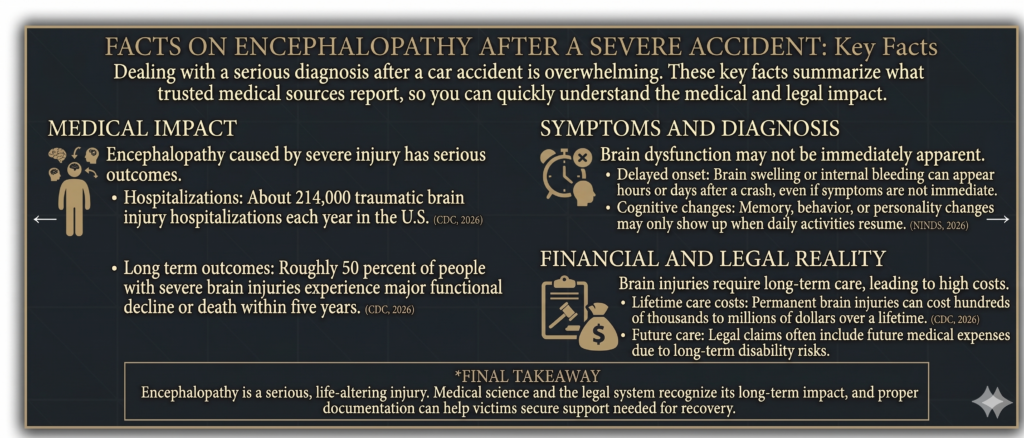
Encephalopathy caused by trauma is a major health concern in the United States.
Hospitalizations: Traumatic brain injuries contribute to about 214,000 hospitalizations each year (CDC, 2026).
Long Term Effects: Research shows that about 50% of people with a significant brain injury will experience a decline in their daily function or die within five years of the injury (CDC, 2026).
Timing and Diagnosis
Brain dysfunction does not always show up immediately after a crash.
Delayed Symptoms: Some people feel fine right after an accident. However, brain swelling or internal bleeding can develop hours or days later (NIH, 2026).
Cognitive Changes: Changes in memory or personality might only become obvious once a person tries to return to their normal work routine (NINDS, 2026).
Financial and Legal Impact
Because brain injuries require specialized care, the costs are high.
Lifetime Costs: The estimated lifetime cost of treating a person with a permanent brain injury can reach millions of dollars depending on the level of care needed (CDC, 2026).
Future Care: Legal claims often include money for “future medical care” because encephalopathy can lead to permanent disability or an increased risk for other brain disorders later in life.
*Final note for victims
An encephalopathy is a life-changing brain injury, but medical science and legal protections both recognize what you are going through. With proper documentation and timely action, many victims are able to secure financial support that helps them focus on healing and rebuilding their lives.
Frequently Asked Questions: Encephalopathy Recovery
Understanding Encephalopathy
What are the chances of recovering from encephalopathy?
Recovery depends on the cause and how quickly treatment begins. According to the National Institute of Neurological Disorders and Stroke, some forms can be reversed if the underlying condition is treated quickly. If caused by a head injury, outcomes vary; some recover fully, while others experience long-term changes in thinking or memory.
Can a car accident cause encephalopathy?
Yes. According to the National Institutes of Health, a blunt force injury in a crash can cause brain swelling or bleeding, disrupting normal function and leading to post-traumatic encephalopathy.
What if I already had a brain condition before the accident?
You may still have a valid legal claim. The NINDS explains that a new injury can worsen an existing condition. If a crash turns a manageable condition into a serious disability, the at-fault party may be responsible.
Symptoms and Diagnosis
What are the early warning signs after a car accident?
Symptoms may develop over time. According to the NIH, common signs include:
- Persistent headaches and nausea
- Sensitivity to light or sound
- Brain fog, confusion, or trouble finding words
- Sleep changes (insomnia or excessive sleep)
What is the difference between a concussion and post-traumatic encephalopathy?
According to the CDC, a concussion is a mild traumatic brain injury. Encephalopathy is a broader term for brain dysfunction that may involve long-lasting problems such as swelling, bleeding, or cognitive decline.
What types of specialists are needed for diagnosis?
Care requires specialists such as Neurologists, Neuropsychologists (for memory and emotional testing), and Occupational Therapists.
Treatment and Recovery
What lifestyle changes are needed during recovery?
Recovery often requires cognitive rest—limiting screens, reading, and complex problem-solving. Experts stress avoiding a second head injury to prevent complications like Second Impact Syndrome.
Is it safe to settle a claim before symptoms fully resolve?
It is usually not recommended. Most medical professionals suggest waiting until Maximum Medical Improvement (MMI) before finalizing any settlement, as encephalopathy can change over time.
Work and Daily Life
How does encephalopathy affect the ability to return to work?
Brain injuries can affect executive function—planning, focus, and decision-making. Common challenges include fatigue after concentration, noise sensitivity, and reduced multitasking ability.
Legal and Insurance
Can I get compensation for memory loss or personality changes?
Yes. Research from the American Association of Neurological Surgeons shows that brain injuries cause lasting cognitive changes that may be included as damages in a legal claim.
How can I prove an invisible injury like encephalopathy?
Documentation of daily impact is critical. Evidence includes journals tracking memory problems, records of mood changes, and testimony from vocational experts.
What types of damages can be recovered?
Compensation may include medical bills, lost wages, pain and suffering, and loss of enjoyment of life. The NIH recognizes TBI as a long-term medical condition, supporting claims for ongoing care.
Are there strict deadlines to file a lawsuit?
Yes. The Legal Information Institute explains that each state has a statute of limitations. In some states, a “discovery rule” may apply if the injury is diagnosed later.
*Important note
These statistics show overall trends, not individual outcomes. Every case is different. Your doctors are the best source for advice based on your personal health, injury, and medical history.
Even with a serious diagnosis, many people move forward, recover, and regain control of their lives with the right care and support.
Need to File Civil Lawsuit in Illinois?
Contact Spiros Law for free consultation. $0 Upfront Attorney’s Fee.
Sources & Further Information
Sources
- Centers for Disease Control and Prevention (CDC): Traumatic Brain Injury (TBI) Statistics and Outcomes
- National Institute of Neurological Disorders and Stroke (NINDS): Encephalopathy Information Page
- National Institutes of Health (NIH): Post-Traumatic Encephalopathy and Brain Dysfunction
- American Association of Neurological Surgeons (AANS): Traumatic Brain Injury Symptoms and Long-Term Impact
- Martinian Lawyers: Statute of Limitations by State
Medical Resources
- Understanding Brain Imaging: Learn how CT scans and MRIs identify swelling and “hidden” injuries at RadiologyInfo.org.
- Neurological Rehabilitation: Explore how occupational and speech therapy help the brain relearn skills via the American Occupational Therapy Association.
- Brain Injury Support: Connect with specialists and local support chapters through the Brain Injury Association of America.
Legal and Financial Assistance
- Proving Invisible Injuries: Read about how cognitive tests and neurologists document “invisible” symptoms like memory loss for legal claims at the American Bar Association.
- Social Security Disability: If a brain injury prevents you from working, explore eligibility for benefits through the Social Security Administration (SSA).
- Managing Long-Term Care Costs: Find resources on financial planning for permanent disabilities through the Family Caregiver Alliance.
- Legal Support: Spiros Law practices in the state of Illinois with an acclaimed legal team known for top peer reviews, multimillion-dollar settlements for past clients, and over three decades of experience in personal injury law and civil litigation. Free case review with $0 upfront attorney fees.
Spiros Law Helpful Articles & Blogs
Disclaimer: This content is for informational purposes only and is not medical or legal advice. Always seek prompt medical care for suspected injuries. Viewing this page does not create an attorney-client relationship. Past results do not guarantee future outcomes. Attorney advertising. Spiros Law is licensed in Illinois.