Understanding Rhabdomyolysis After an Auto Collision
By: James D. Spiros | Last Reviewed & Updated: May 14, 2026
A car wreck can cause rhabdomyolysis through physical trauma. During a crash, a person might experience a crush injury if they are pinned or trapped inside the vehicle. The heavy pressure on the muscles causes the tissue to die and release toxins into the body.
In other cases, being immobile for a long time after an injury can also trigger the condition. Doctors look for signs of rhabdo such as dark or tea colored urine, muscle weakness, and extreme muscle pain.
This section explains how rhabdomyolysis affects your health and helps you understand the legal options available to you.
What Is Rhabdomyolysis?
Rhabdomyolysis, often called rhabdo, is a serious medical condition that happens when damaged muscle tissue breaks down. When muscles are crushed or severely injured, they release a protein called myoglobin into the bloodstream.
If too much myoglobin enters the blood at once, it can overwhelm the kidneys. The kidneys are responsible for filtering waste out of your body. When they cannot handle the high levels of muscle protein, they may stop working. This can lead to kidney damage or even kidney failure if a person does not receive medical care quickly.
Disclaimer: This content is for informational purposes only and is not medical or legal advice. Always seek prompt medical care for suspected injuries.
Why Medical Bills Are So High
- Emergency Care: Doctors use blood and urine tests to check for high levels of creatine kinase, which shows muscle damage.
- Intravenous Fluids: Patients often need large amounts of IV fluids to help the kidneys flush out the muscle proteins.
- Dialysis: If the kidneys stop working, you may need a machine to filter your blood while your body heals.
- Hospital Stays: Most people with this condition stay in the hospital for several days so doctors can monitor their kidney function.
Lifestyle Changes You May Face
- Physical Limits: You must avoid intense exercise or heavy lifting until your muscles and kidneys fully recover.
- Hydration Needs: You will likely need to drink much more water than usual to keep your kidneys healthy.
- Work Disruptions: Severe muscle weakness and fatigue can make it impossible to perform physical labor or stay active during a full work shift.
Seeking Legal Help
- Linking the Injury to the Crash: Lawyers work with medical experts to prove that the muscle damage was a direct result of the accident trauma.
- Recovering Medical Costs: A claim can help cover the high costs of emergency room visits and possible dialysis treatments.
- Replacing Lost Income: If you cannot return to work because of physical weakness, a legal case can seek money for your lost wages.
- Addressing Long Term Harm: Some victims suffer permanent kidney damage. A lawyer calculates the cost of future medical care.
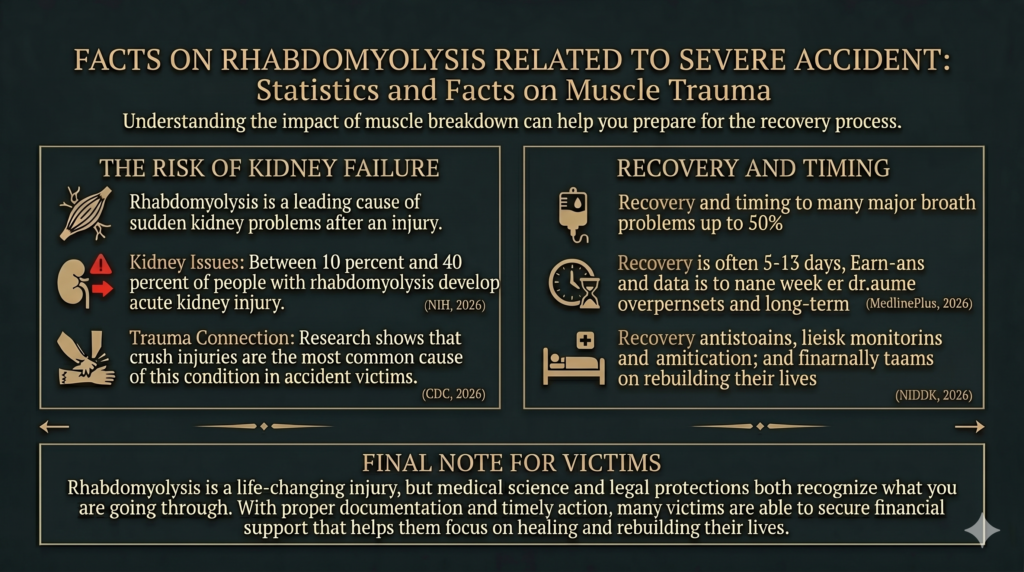
Statistics and Facts on Muscle Trauma
The Risk of Kidney Failure
- Kidney Issues: Between 10 percent and 40 percent of people with rhabdomyolysis develop acute kidney injury (NIH, 2026).
- Trauma Connection: Research shows that crush injuries are the most common cause of this condition in accident victims (CDC, 2026).
Recovery and Timing
- Early Signs: Dark urine is often the first sign, appearing within hours of the muscle injury (MedlinePlus, 2026).
- Hospitalization: Most patients see an improvement in their kidney function within one to two weeks with immediate care (NIDDK, 2026).
Frequently Asked Questions: Rhabdomyolysis and Recovery
What is the most common sign of rhabdomyolysis?
According to the National Library of Medicine, the most common signs are muscle pain, weakness, and dark red or brown urine. However, some people do not have muscle symptoms at all, which is why blood tests are necessary after a serious trauma.
Can I fully recover from rhabdomyolysis?
Yes. According to the National Institute of Diabetes and Digestive and Kidney Diseases, many people recover fully if they receive treatment before their kidneys fail. If the kidneys do suffer damage, they can often heal over time with proper hydration and medical monitoring.
How does a car crash cause muscle breakdown?
The Centers for Disease Control and Prevention (CDC) notes that physical trauma, such as being crushed or hit with extreme force, destroys muscle cells. This physical destruction is the primary trigger for rhabdomyolysis in accident cases.
Can I file a claim if the condition showed up days after the crash?
Yes. It is common for rhabdomyolysis to develop or get worse in the days following an injury. If medical records show that the muscle breakdown started because of the accident trauma, you can include it in a personal injury claim.
What damages can I recover for a kidney injury?
According to the U.S. Department of Justice (DOJ), victims can recover compensation for medical bills, lost income, and the cost of future care if the injury leads to long-term kidney problems.
Need to File a Civil Lawsuit in Illinois?
Contact Spiros Law for a free consultation. $0 Upfront Attorney’s Fee.
Sources & Learn More
- CDC: Rhabdomyolysis: Occupational Monitoring
- NIH: Rhabdomyolysis Clinical Overview
- NIDDK: Acute Kidney Injury Recovery
Legal Support: Spiros Law practices in Illinois with over three decades of experience in personal injury law. Free case review available.
Disclaimer: This content is for informational purposes only and is not medical or legal advice. Spiros Law is licensed in Illinois.